
Post-Crisis Student Wellbeing Recovery (Arab World)
A region-first framework helping schools and education systems understand and respond to student wellbeing after crisis.
What this Initiative Introduces
Why this matters now
At least 52 million school-age children across the Arab World and wider region have faced education disruption due to the recent conflict. This conflict has reshaped how students feel, engage, and learn. Much of this impact remains invisible to schools, making recovery difficult to prioritise.
52
million children
affected by education disruption
Source: Save the Children, March 2026

The Framework
The six conditions shaping student recovery
A structured, student voice-based framework that helps schools understand post-crisis student experience and translate it into clear, actionable recovery priorities at school and system level.
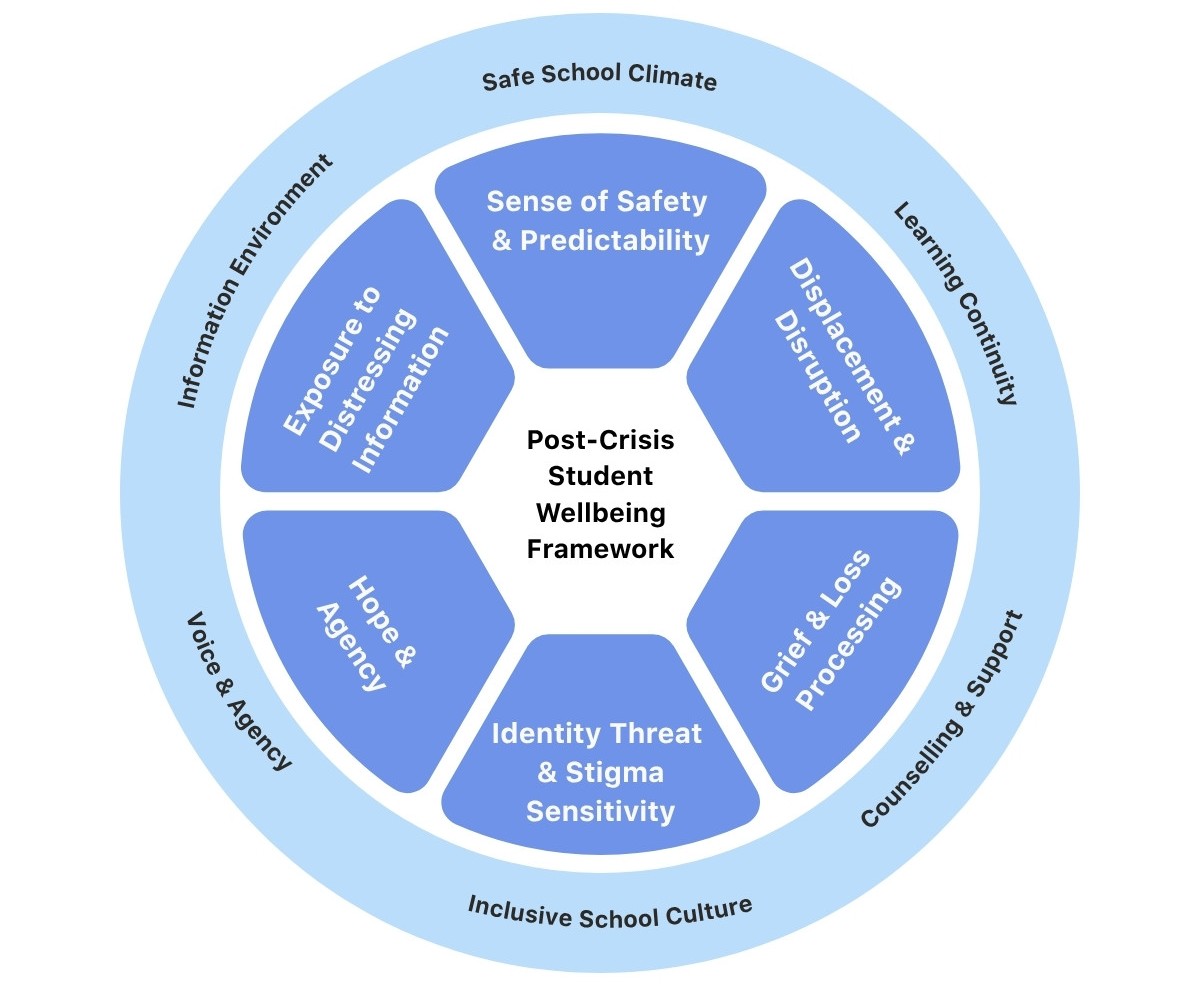
Sense of Safety & Predictability
Whether students feel secure, stable, and able to anticipate their environment.
Displacement & Disruption
The impact of interrupted routines, relocation, or instability in daily life.
Grief & Loss Processing
How students are coping with personal or collective loss.
Exposure to Distressing Information
The extent to which students are affected by ongoing negative or overwhelming information.
Hope & Agency
Students' sense of control, optimism, and belief in their ability to move forward.
Identity Threat & Stigma Sensitivity
Experiences of exclusion, tension, or perceived judgment within the school environment.
What Schools Gain
What schools gain from this framework

Visibility
Surface wellbeing conditions that remain invisible in traditional academic data.
Tracking
Monitor student recovery over time through consistent measurement cycles.
Evidence
Prioritise leadership, counselling, and classroom supports with structured data.
Safeguards & Stance
Designed to be used responsibly
This framework is non-clinical and not a diagnostic tool. It is designed for cohort-level insights — not individual identification — and aligns with existing school safeguarding pathways. Schools remain in control of how insights are interpreted and acted upon.
Built for Education Stakeholders
Who It's For
Schools
To understand the wellbeing conditions affecting students and guide a structured, evidence-informed recovery response.
School Networks
To enable consistent post-crisis measurement across your member schools and surface shared needs.
Ministries & Education Systems
To build national-level visibility into student wellbeing and support a coordinated, scalable response.
Get Involved
Join the initiative
This is a region-first effort. If you lead a school, association, or ministry and want to understand how your students are experiencing recovery, we'd like to talk.